Speech recovery after stroke is a complex process that affects approximately 25-40% of stroke survivors in the United States. Understanding the recovery timeline, treatment options, and rehabilitation strategies is crucial for patients and families navigating this challenging journey. This comprehensive guide provides the latest 2025 information on speech recovery, including evidence-based treatments and realistic expectations for regaining communication abilities.
Understanding Speech Problems After Stroke
Stroke affects speech when brain areas responsible for language processing sustain damage. The most common speech difficulties include aphasia, dysarthria, and apraxia of speech. Aphasia occurs in approximately 38% of stroke patients, affecting the ability to understand or produce language. Dysarthria impacts speech clarity due to muscle weakness, while apraxia affects the coordination of speech movements.
The severity of speech difficulties after stroke depends on the location and extent of brain damage. Left hemisphere strokes typically cause more severe language problems, as this brain region controls language function in 95% of right-handed individuals and 70% of left-handed people. Early identification and assessment are critical for developing effective treatment plans.
Types of Speech Disorders After Stroke
Aphasia presents in several forms, including Broca’s aphasia (difficulty producing speech), Wernicke’s aphasia (difficulty understanding speech), and global aphasia (severe impairment in all language areas). Dysarthria causes slurred or unclear speech due to muscle weakness, while apraxia affects the brain’s ability to coordinate speech movements, resulting in inconsistent speech errors.
Brain Areas Affected in Speech Recovery
The Broca’s area in the left frontal lobe controls speech production, while Wernicke’s area in the temporal lobe manages language comprehension. Damage to connecting pathways between these areas can also impact speech recovery. Modern neuroimaging shows that multiple brain networks contribute to language function, explaining why recovery patterns vary significantly among stroke survivors.
Speech Recovery Timeline and Statistics
Most speech recovery after stroke occurs within the first six months, with the most significant improvements happening in the first three months. According to 2024 research, approximately 60-70% of stroke survivors with aphasia show some degree of improvement within the first year. However, recovery can continue for years with consistent therapy and practice.
The stroke recovery speech timeline varies considerably based on factors such as age, stroke severity, location of brain damage, and access to rehabilitation services. Studies indicate that younger patients (under 65) have better recovery outcomes, with 75% showing significant improvement compared to 55% in older patients. Early intervention within the first 48 hours significantly improves long-term speech outcomes.
Early Recovery Phase (0-3 months)
The first three months represent the most critical period for speech recovery. During this acute phase, the brain exhibits maximum neuroplasticity, allowing for rapid improvements. Intensive speech therapy starting within 24-48 hours of stroke onset can significantly enhance recovery outcomes. Most patients who will recover functional communication abilities show initial signs of improvement within this timeframe.
Extended Recovery Phase (3-12 months)
Between three and twelve months post-stroke, speech improvements continue but at a slower pace. This phase focuses on refining communication skills and developing compensatory strategies. Approximately 40% of patients continue to make meaningful progress during this period, particularly with consistent therapy and family support. The brain’s ability to reorganize and form new neural pathways remains active throughout this phase.
Treatment Options for Speech Recovery
Modern speech therapy after stroke employs evidence-based approaches tailored to individual needs. Speech-language pathologists use comprehensive assessments to determine the most effective treatment strategies. Current best practices include constraint-induced language therapy, melodic intonation therapy, and computer-assisted therapy programs that have shown significant success rates in 2024 studies.
Treatment intensity plays a crucial role in recovery outcomes. Research indicates that patients receiving intensive speech therapy (3-5 hours daily) show 40% better outcomes than those receiving standard care (1-2 hours, 2-3 times weekly). The American Speech-Language-Hearing Association recommends a minimum of 8-10 hours of direct therapy per week during the acute recovery phase.
Traditional Speech Therapy Approaches
Traditional speech therapy techniques include articulation exercises, language drills, and communication practice. These methods focus on rebuilding neural pathways through repetitive practice and systematic progression. Therapists use picture naming tasks, reading exercises, and conversation practice to improve various aspects of communication. Success rates with traditional approaches range from 50-70% for moderate impairments.
Innovative Technology-Based Treatments
Technology-enhanced speech recovery programs include tablet-based apps, virtual reality therapy, and brain stimulation techniques. Transcranial direct current stimulation (tDCS) combined with speech therapy has shown 25% better outcomes than therapy alone. Mobile apps provide continuous practice opportunities, with studies showing that patients using these tools 30+ minutes daily achieve faster recovery milestones.
Factors Affecting Speech Recovery Success
Several key factors influence the probability of regaining speech after stroke. Age remains the most significant predictor, with patients under 50 showing 80% likelihood of meaningful recovery compared to 45% for those over 75. The size and location of the stroke, pre-existing health conditions, and motivation levels also substantially impact recovery outcomes.
Social support and family involvement significantly enhance speech recovery success rates. Patients with strong family support show 35% better outcomes than those without adequate support systems. Educational level and pre-stroke communication abilities also influence recovery, with higher education levels correlating with better outcomes due to cognitive reserve.
Medical and Physical Factors
Stroke severity measured by the NIH Stroke Scale strongly predicts speech recovery potential. Mild strokes (NIHSS 1-4) show 85% recovery rates, while severe strokes (NIHSS 15+) show 25% recovery rates. Co-occurring conditions like diabetes, hypertension, and depression can slow recovery progress and require integrated treatment approaches.
Psychological and Social Factors
Depression affects 30-50% of stroke survivors and significantly impacts speech recovery outcomes. Patients with untreated depression show 40% slower recovery rates. Motivation, cognitive function, and participation in therapy sessions directly correlate with improvement levels. Family education and support groups improve both psychological well-being and communication outcomes.
Home-Based Speech Recovery Strategies
Effective home speech recovery exercises can significantly supplement professional therapy. Daily practice routines including reading aloud, singing, and conversation practice help maintain and improve speech abilities. Family members can learn specific techniques to support communication, creating a therapeutic environment that accelerates recovery progress.
Structured home programs should include 30-60 minutes of daily practice focusing on specific speech goals. Speech recovery exercises like tongue twisters, breathing exercises, and word association games can be easily implemented. Technology tools such as speech therapy apps provide guided practice sessions and progress tracking capabilities.
Communication Strategies During Recovery
While working toward speech recovery, patients and families need effective communication strategies. Alternative communication methods include gesture, writing, drawing, and communication boards. These tools reduce frustration and maintain social connections during the recovery process. Learning to use these strategies effectively can significantly improve quality of life for stroke survivors.
Technology-assisted communication devices range from simple picture boards to sophisticated speech-generating devices. Communication apps on tablets and smartphones provide immediate access to words and phrases, enabling participation in conversations. Training family members in communication facilitation techniques ensures consistent support throughout the recovery journey.
Low-Tech Communication Solutions
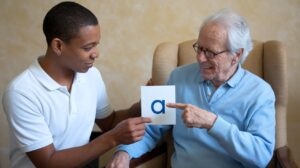
Simple communication tools include alphabet boards, picture cards, and gesture systems. These methods require minimal training and can be implemented immediately. Writing, drawing, and pointing to pictures provide alternative ways to express needs and thoughts. These strategies work particularly well for patients with severe speech impairments who retain comprehension abilities.
High-Tech Communication Aids
Advanced communication devices include speech-generating devices (SGDs) and tablet-based applications. These tools can be programmed with personalized vocabulary and phrases. Voice banking technology allows patients to preserve their natural voice before speech deteriorates. Modern devices integrate with smartphones and smart home systems for comprehensive communication support.
Preventing Speech Complications After Stroke
Proactive measures can prevent speech complications after stroke and optimize recovery outcomes. Early mobilization, proper nutrition, and preventing secondary complications like pneumonia are crucial. Maintaining cognitive engagement through reading, puzzles, and social interaction helps preserve language abilities during the recovery process.
Regular monitoring by healthcare professionals helps identify and address complications early. Speech assessment tools track progress and identify areas needing focused intervention. Preventing isolation and depression through social engagement and support groups significantly improves both speech and overall recovery outcomes.
Long-term Outlook and Realistic Expectations
The long-term prognosis for speech recovery varies widely but remains hopeful for most patients. While complete recovery occurs in about 30% of cases, 70% of patients achieve functional communication abilities within two years. Understanding realistic expectations helps patients and families set appropriate goals and maintain motivation throughout the recovery process.
Continued improvement is possible years after stroke with ongoing therapy and practice. Chronic phase recovery focuses on maintaining abilities and preventing decline. Participation in speech therapy groups, continued home practice, and staying socially active contribute to long-term success in communication recovery.
Related video about speech recovery after stroke
This video complements the article information with a practical visual demonstration.
Everything you need to know about speech recovery after stroke
Can speech be fully restored after a stroke?
Complete speech recovery occurs in approximately 30% of stroke survivors, while 70% achieve functional communication within two years. The extent of recovery depends on factors such as stroke severity, location of brain damage, age, and intensity of rehabilitation. Early intervention and consistent therapy significantly improve the chances of meaningful recovery.
How long does it take to get speech back after a stroke?
Most significant speech recovery occurs within the first 6 months, with peak improvement in the first 3 months. However, recovery can continue for years with proper therapy. Studies show that 60-70% of patients with speech problems show improvement within the first year, and some continue improving for 2-3 years post-stroke.
What is the probability of regaining speech after a stroke?
The probability varies based on multiple factors, but overall statistics show that 85% of mild stroke patients recover functional speech, while 25% of severe stroke patients achieve meaningful communication. Age significantly impacts outcomes, with patients under 50 having an 80% likelihood of recovery compared to 45% for those over 75.
What should I do if my parent had a stroke and can’t talk?
Seek immediate speech therapy evaluation and begin treatment as soon as medically cleared. Learn alternative communication methods like gesture, writing, and picture boards. Maintain patience and provide emotional support. Consider joining stroke support groups and educate yourself about communication strategies to help your parent during recovery.
Are mini stroke speech problems permanent?
Mini strokes (TIAs) typically cause temporary speech problems that resolve within 24 hours. However, they increase risk for future strokes and may indicate underlying conditions requiring treatment. Some patients experience lingering subtle speech changes that may benefit from speech therapy evaluation and treatment.
How can I help with speech recovery at home?
Implement daily speech exercises including reading aloud, singing, and conversation practice. Use speech therapy apps for guided practice. Create a supportive communication environment by being patient and using alternative communication methods when needed. Encourage social interaction and participation in speech therapy groups for optimal recovery outcomes.
| Recovery Phase | Timeline | Expected Improvements |
|---|---|---|
| Acute Phase | 0-3 months | Most significant recovery, 60-70% show improvement |
| Subacute Phase | 3-12 months | Continued improvement, refining communication skills |
| Chronic Phase | 12+ months | Maintenance and possible continued gains with therapy |

Jude Deveraux, une auteure américaine renommée pour ses romans captivants de romance et de fiction historique, a créé un univers littéraire avec plus de 40 best-sellers du New York Times. Sa maîtrise de plusieurs langues enrichit sa connexion avec un public mondial, inspirant ainsi les lecteurs du monde entier avec des histoires intemporelles. En dehors de l’écriture, Jude Deveraux est passionnée par la peinture, la randonnée et la cuisine internationale.