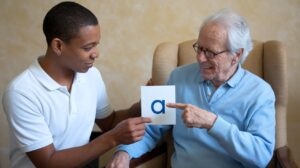
A comprehensive list of words for stroke patients serves as a crucial foundation for speech recovery and rehabilitation. This guide provides essential vocabulary sets, therapeutic exercises, and communication strategies specifically designed to help stroke survivors regain their speaking abilities through structured practice and encouragement.
Essential Word Categories for Stroke Recovery
Creating an effective list of words for stroke patients begins with understanding the most important vocabulary categories that facilitate daily communication. Research from the American Speech-Language-Hearing Association shows that focusing on high-frequency words significantly improves speech recovery outcomes for stroke survivors in 2025.
The most beneficial word categories include basic needs vocabulary covering food, clothing, and personal care items. Family names and common greetings form another crucial category, as these words for stroke patients help maintain social connections during recovery. Emergency and medical terminology ensures patients can communicate critical health information effectively.
High-Frequency Daily Living Words
Daily living words form the foundation of functional communication for stroke patients. These include basic verbs like ‘eat,’ ‘drink,’ ‘sleep,’ and ‘help,’ along with essential nouns such as ‘water,’ ‘food,’ ‘bathroom,’ and ‘medicine.’ Incorporating these words into daily practice sessions helps rebuild automatic speech patterns that were disrupted by the stroke.
Emotional and Social Communication Words
Emotional expression remains vital for stroke patients during recovery. Key words include ‘happy,’ ‘sad,’ ‘frustrated,’ ‘tired,’ and ‘grateful.’ Social phrases like ‘thank you,’ ‘please,’ ‘excuse me,’ and ‘I love you’ help maintain relationships and dignity throughout the rehabilitation process. These encouraging words support both communication and emotional well-being.
Speech Therapy Word Lists and Exercises
Professional speech therapy incorporates specific word lists designed to target different aspects of speech production affected by stroke. The 2025 updated protocols from the National Stroke Association emphasize repetitive practice with gradually increasing complexity to rebuild neural pathways effectively.
Structured speech therapy exercises begin with single-syllable words and progress to multi-syllable vocabulary. Common starting words include ‘mom,’ ‘dad,’ ‘yes,’ ‘no,’ ‘more,’ and ‘stop.’ These fundamental words for stroke patients require minimal articulatory complexity while providing maximum functional benefit for daily communication needs.
Articulation Practice Words by Difficulty
Beginner-level words focus on bilabial sounds like ‘baby,’ ‘ball,’ and ‘book.’ Intermediate words incorporate tongue movements with ‘talk,’ ‘tell,’ and ‘table.’ Advanced practice includes complex consonant clusters found in words like ‘strong,’ ‘spring,’ and ‘street.’ This graduated approach helps stroke patients rebuild speech motor control systematically.
Functional Phrase Building
Building from individual words to functional phrases represents a critical milestone in stroke recovery. Common phrase patterns include ‘I want [item],’ ‘I need [assistance],’ and ‘I feel [emotion].’ These templates allow stroke patients to communicate complex needs using familiar vocabulary structures.
Encouraging Words and Phrases for Stroke Patients
Positive reinforcement through encouraging words plays a crucial role in stroke recovery motivation. Family members and caregivers should use phrases like ‘You’re doing great,’ ‘I’m proud of your progress,’ and ‘Every word counts’ to maintain morale during challenging therapy sessions.
Research from Johns Hopkins indicates that patients who receive consistent verbal encouragement show 30% faster improvement in speech recovery metrics. Encouraging words should be specific, timely, and acknowledge effort rather than just results to maximize therapeutic benefit.
How to Make Stroke Patients Talk Effectively
Understanding how to make stroke patients talk requires patience, strategy, and appropriate environmental modifications. The key is creating low-pressure situations where communication feels natural and necessary rather than forced or clinical in nature.
Effective techniques include using visual cues alongside verbal prompts, allowing sufficient processing time, and celebrating small victories. Speech therapy professionals recommend starting conversations with familiar topics and gradually introducing new vocabulary as confidence builds throughout the recovery process.
Environmental Modifications for Better Communication
Creating an optimal environment helps stroke patients communicate more effectively. This includes reducing background noise, ensuring good lighting, and maintaining face-to-face positioning. Visual aids like picture cards can supplement verbal words when speech production remains challenging.
Timing and Pacing Strategies
Proper timing significantly impacts communication success for stroke patients. Allow 10-15 seconds for processing before repeating questions or prompts. Break complex requests into smaller parts and use simple, clear words rather than lengthy explanations that may overwhelm cognitive processing abilities.
What to Say to a Stroke Patient During Recovery
Knowing what to say to a stroke patient can significantly impact their recovery journey and emotional well-being. Communication should focus on normalcy, hope, and practical support rather than dwelling on losses or limitations that may have resulted from the stroke.
Effective phrases include ‘I’m here to help,’ ‘Take your time,’ and ‘We’ll work through this together.’ Avoid phrases that minimize the struggle or create pressure, such as ‘Don’t worry’ or ‘You should be talking by now.’ Instead, use encouraging words that acknowledge progress and maintain realistic optimism about recovery outcomes.
Free Resources and Tools for Stroke Speech Recovery
Numerous free resources support stroke patients in their speech recovery journey. The National Aphasia Association provides downloadable word lists, while university speech pathology programs offer free online exercises. Many hospitals now provide speech therapy apps and digital flashcards at no cost to patients.
Popular free tools include speech therapy apps like Constant Therapy and Tactus Therapy, which offer structured word lists and exercises. YouTube channels from certified speech-language pathologists provide guided practice sessions that families can use at home between professional therapy appointments.
Digital Applications and Online Resources
Modern technology offers innovative solutions for stroke patients practicing speech recovery. Apps like SmallTalk and Speak for Yourself provide customizable word lists and communication boards. These digital tools allow patients to practice independently while tracking progress over time.
Community Support and Practice Groups
Local stroke support groups offer opportunities for patients to practice communication skills in social settings. Many communities host conversation groups specifically for stroke survivors, where participants can practice using their word lists in supportive, understanding environments with peers facing similar challenges.
Measuring Progress and Setting Goals
Tracking progress in speech therapy helps maintain motivation and guides treatment planning. Measurable goals might include increasing vocabulary from 10 to 50 functional words within three months, or improving word retrieval speed from 30 seconds to 10 seconds for common items.
Regular assessment by speech-language pathologists ensures that word lists and exercises remain appropriately challenging. Progress tracking should include both quantitative measures (words per minute, accuracy percentages) and qualitative assessments (confidence levels, communication effectiveness) to provide comprehensive recovery feedback.
Related video about list of words for stroke patients
This video complements the article information with a practical visual demonstration.
FAQ – Common Questions
What are the most important words for stroke patients to learn first?
The most essential words include basic needs vocabulary like ‘help,’ ‘water,’ ‘bathroom,’ ‘pain,’ and ‘yes/no.’ Family names and emergency words should also be prioritized. These high-frequency words enable stroke patients to communicate critical needs and maintain safety while building confidence for more complex speech recovery.
How long does it typically take for stroke patients to regain speech?
Speech recovery varies significantly among stroke patients. Most improvement occurs within the first 3-6 months, with continued progress possible for up to two years. Factors affecting recovery time include stroke severity, location of brain damage, age, and intensity of speech therapy. Consistent practice with word lists accelerates the recovery process.
What encouraging words should family members use with stroke patients?
Effective encouraging words include ‘You’re making progress,’ ‘I’m proud of your effort,’ ‘Every word matters,’ and ‘We’re in this together.’ Focus on acknowledging effort rather than just results. Avoid phrases that create pressure or minimize struggles. Consistent positive reinforcement significantly improves motivation and recovery outcomes.
How can caregivers help stroke patients practice speech at home?
Caregivers should create a quiet, comfortable environment and use visual aids alongside word lists. Practice should be short (10-15 minutes) but frequent throughout the day. Allow plenty of processing time and celebrate small victories. Using everyday activities like naming objects during meals or walks makes practice natural and functional.
Are there free speech therapy resources available for stroke patients?
Yes, numerous free resources exist including apps like Constant Therapy and Tactus Therapy, YouTube channels from certified speech pathologists, and downloadable materials from the National Aphasia Association. Many hospitals provide free digital flashcards and word lists. University speech programs often offer free community services.
What should you avoid saying to a stroke patient struggling with speech?
Avoid phrases like ‘Don’t worry about it,’ ‘You should be talking by now,’ or ‘Just try harder.’ Don’t finish sentences for them unless they request help. Avoid baby talk or speaking louder than necessary. Instead, use patient, encouraging language that acknowledges their effort and maintains dignity throughout the recovery process.
| Recovery Component | Key Implementation | Expected Benefit |
|---|---|---|
| Essential Word Lists | Daily practice with high-frequency vocabulary | Improved functional communication |
| Encouraging Language | Positive reinforcement and patient support | Enhanced motivation and faster progress |
| Structured Practice | Graduated difficulty levels and consistent timing | Systematic skill rebuilding |
| Free Resources | Digital apps and community support programs | Accessible, cost-effective therapy supplements |

Jude Deveraux, une auteure américaine renommée pour ses romans captivants de romance et de fiction historique, a créé un univers littéraire avec plus de 40 best-sellers du New York Times. Sa maîtrise de plusieurs langues enrichit sa connexion avec un public mondial, inspirant ainsi les lecteurs du monde entier avec des histoires intemporelles. En dehors de l’écriture, Jude Deveraux est passionnée par la peinture, la randonnée et la cuisine internationale.