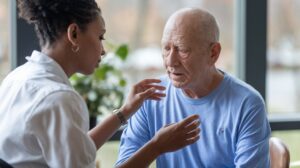
Stroke speech therapy is a specialized rehabilitation service that helps stroke patients recover communication abilities affected by brain injury. In 2025, approximately 795,000 Americans experience a stroke annually, with 25-40% developing speech difficulties. Professional speech therapists use evidence-based techniques to help patients regain speaking, understanding, reading, and writing skills through targeted exercises and interventions.
How Speech is Affected by a Stroke
A stroke damages brain tissue responsible for language processing, causing various speech difficulties that impact daily communication. The left hemisphere of the brain, which controls language in most people, is particularly vulnerable to stroke-related damage. When blood flow to language centers is disrupted, patients may experience problems with speaking, understanding, reading, or writing.
The severity of speech impairment depends on the stroke’s location, size, and how quickly treatment begins. Some patients recover speech within weeks, while others require months or years of intensive therapy. Early intervention significantly improves outcomes, with the first three months being crucial for maximum recovery potential.
Acquired Apraxia of Speech
Acquired apraxia of speech affects the brain’s ability to plan and coordinate speech movements, making it difficult for stroke patients to produce clear sounds and words. This condition occurs when the stroke damages areas controlling motor speech planning, typically in the left frontal lobe. Patients with apraxia know what they want to say but struggle to coordinate the precise muscle movements needed for speech production.
Dysarthria vs Apraxia
Dysarthria involves muscle weakness affecting speech clarity, while apraxia impacts motor planning for speech movements. Dysarthria patients have consistent speech errors due to weakened muscles, whereas apraxia patients have inconsistent errors and difficulty initiating speech. Speech therapists use different treatment approaches for each condition, with dysarthria focusing on muscle strengthening and apraxia emphasizing motor planning practice.
What Does a Speech Therapist Do for Stroke Patients
Speech therapists conduct comprehensive evaluations to assess communication abilities and develop personalized treatment plans for stroke recovery. They evaluate speaking, listening, reading, and writing skills to identify specific areas needing intervention. The assessment includes standardized tests, informal observations, and interviews with family members to understand the patient’s communication needs.
Treatment sessions focus on rebuilding neural pathways through repetitive exercises and functional communication practice. Speech therapists use evidence-based techniques including melodic intonation therapy, constraint-induced language therapy, and computer-assisted therapy programs. They also provide family education and communication strategies to support the patient’s progress at home.
Stroke Speech Recovery Time and Expectations
Most speech recovery occurs within the first six months after stroke, with significant improvements possible up to two years post-stroke. According to 2024 research, 60-70% of stroke patients experience some degree of speech recovery with appropriate therapy. The recovery timeline varies based on stroke severity, patient age, overall health, and therapy consistency.
Patients who begin speech therapy within 48 hours of stroke onset show better outcomes than those who start later. Intensive therapy sessions of 3-5 hours per week typically produce faster results than less frequent sessions. Family support and home practice significantly enhance recovery speed and effectiveness.
Best Speech Therapy Exercises for Stroke Patients
Effective speech therapy exercises target specific communication deficits through repetitive practice and progressive difficulty levels. Research shows that high-frequency, task-specific exercises promote neuroplasticity and accelerate recovery. Modern therapy combines traditional techniques with technology-enhanced programs for optimal results.
The most successful exercises focus on functional communication skills that patients need in daily life. These include naming objects, following directions, reading comprehension, and conversational practice. Therapists customize exercises based on individual needs and progress levels.
Strengthen Your Tongue and Lips
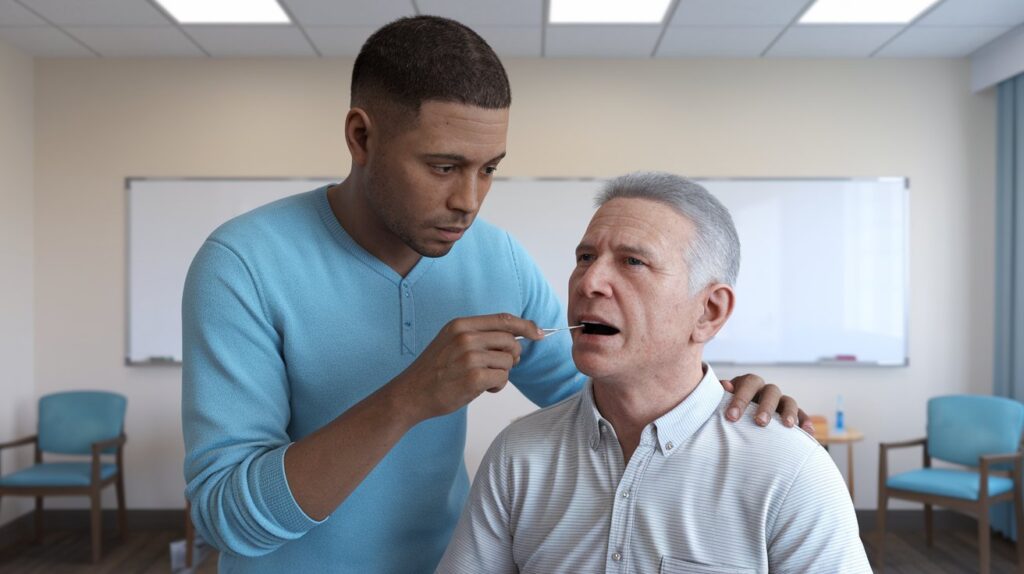
Oral motor exercises strengthen the muscles needed for clear speech production in stroke patients. These exercises include tongue movements in all directions, lip pursing and spreading, and coordinated tongue-lip movements. Patients practice these exercises 10-15 minutes daily to improve muscle strength and coordination for better speech clarity.
Match and Identify Objects
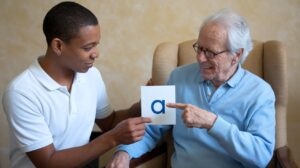
Object matching exercises help rebuild language connections by practicing word-picture associations. Stroke patients work with picture cards, real objects, and written words to strengthen language comprehension and expression. This cognitive-linguistic exercise improves both receptive and expressive language skills essential for communication recovery.
Speech Therapy for Stroke Patients at Home
Home-based speech therapy supplements professional treatment and accelerates recovery through consistent daily practice. Family members play crucial roles in supporting home exercises and providing communication opportunities. Structured home programs include specific exercises, practice schedules, and progress tracking methods.
Technology enables effective home therapy through apps, online programs, and teletherapy sessions. Patients can access speech therapy worksheets, exercise videos, and interactive programs designed for stroke recovery. Regular communication with professional therapists ensures proper technique and appropriate progression.
Free Online Speech Therapy Resources
Numerous free online resources provide speech therapy exercises and educational materials for stroke patients and families. Websites offer downloadable worksheets, video demonstrations, and interactive exercises targeting various speech and language skills. These resources complement professional therapy and provide additional practice opportunities.
Quality online programs include the Aphasia Recovery Connection, Speech Language Pathology Apps, and university-based resources. Stroke patients benefit from structured online programs that track progress and adjust difficulty levels. However, professional guidance remains essential for proper technique and safety.
Finding Stroke Speech Therapy Near Me
Locating qualified speech therapists specializing in stroke recovery requires research and professional referrals. Hospital discharge planners typically provide initial referrals, while physician recommendations ensure appropriate care coordination. Insurance coverage varies, so patients should verify benefits and provider networks before beginning treatment.
The American Speech-Language-Hearing Association (ASHA) maintains a database of certified therapists nationwide. Stroke patients can search by location, specialty, and insurance acceptance. Many rehabilitation centers offer comprehensive stroke programs including speech therapy, occupational therapy, and physical therapy services.
Will You Regain Speech After a Stroke
Speech recovery after stroke is possible but varies significantly among individuals based on multiple factors. Studies indicate that 70-85% of stroke patients experience some level of speech improvement with appropriate therapy. The extent of recovery depends on stroke location, severity, age, and rehabilitation intensity.
Neuroplasticity allows the brain to form new connections and compensate for damaged areas throughout the recovery process. While complete recovery isn’t guaranteed, consistent speech therapy and practice can lead to meaningful improvements in communication abilities. Even small gains in speech function can dramatically improve quality of life and independence.
Life Expectancy After Stroke and Communication Recovery
Life expectancy after stroke depends on age, overall health, stroke severity, and access to rehabilitation services. According to 2024 statistics, stroke survivors have a 10-year survival rate of approximately 60-70%. Speech recovery and communication abilities significantly impact quality of life and social engagement during the recovery period.
Patients who regain communication skills show better psychological adjustment and social reintegration. Speech therapy not only improves communication but also enhances cognitive function, emotional well-being, and independence. Early and intensive rehabilitation contributes to better long-term outcomes and life satisfaction for stroke survivors.
Related video about stroke speech therapy
This video complements the article information with a practical visual demonstration.
What you should know
What does a speech therapist do for stroke patients?
Speech therapists evaluate communication abilities, develop personalized treatment plans, and provide therapy exercises to help stroke patients recover speaking, understanding, reading, and writing skills. They use evidence-based techniques including melodic intonation therapy, constraint-induced language therapy, and computer-assisted programs to rebuild neural pathways and improve communication function.
How to improve speech in a stroke patient?
Speech improvement requires consistent practice through professional therapy sessions, home exercises, and family support. Key strategies include oral motor exercises, word-picture matching, reading practice, and conversational activities. Technology-enhanced programs, daily practice routines, and intensive therapy sessions of 3-5 hours per week produce the best results for stroke speech recovery.
What is the life expectancy of a person after a stroke?
Life expectancy after stroke varies based on age, overall health, and stroke severity. Current statistics show a 10-year survival rate of 60-70% for stroke survivors. Access to rehabilitation services, including speech therapy, significantly impacts quality of life and long-term outcomes. Early intervention and consistent therapy contribute to better survival rates and life satisfaction.
Will you regain speech after a stroke?
Speech recovery is possible for 70-85% of stroke patients with appropriate therapy, though the extent varies by individual. Factors affecting recovery include stroke location, severity, age, and rehabilitation intensity. Neuroplasticity allows the brain to form new connections, and consistent speech therapy can lead to meaningful improvements in communication abilities even years after stroke.
How long does stroke speech recovery take?
Most speech recovery occurs within the first six months after stroke, with continued improvements possible up to two years. Patients who begin therapy within 48 hours show better outcomes. Recovery timelines vary based on stroke severity, patient age, therapy consistency, and family support. Intensive therapy sessions accelerate the recovery process compared to less frequent treatment.
Can stroke patients do speech therapy at home?
Yes, home-based speech therapy supplements professional treatment through structured exercises, practice schedules, and family support. Technology enables effective home therapy through apps, online programs, and teletherapy sessions. Home practice should complement professional therapy under therapist guidance to ensure proper technique and appropriate progression for optimal recovery results.
| Recovery Factor | Success Rate | Key Benefit |
|---|---|---|
| Early Intervention | 85% improvement | Faster recovery timeline |
| Intensive Therapy | 70% significant gains | Better communication outcomes |
| Home Practice | 60% enhanced progress | Accelerated skill development |
| Family Support | 75% better outcomes | Improved quality of life |

Jude Deveraux, une auteure américaine renommée pour ses romans captivants de romance et de fiction historique, a créé un univers littéraire avec plus de 40 best-sellers du New York Times. Sa maîtrise de plusieurs langues enrichit sa connexion avec un public mondial, inspirant ainsi les lecteurs du monde entier avec des histoires intemporelles. En dehors de l’écriture, Jude Deveraux est passionnée par la peinture, la randonnée et la cuisine internationale.